God Rises in the Mud Season
Nature nudges us out of the greyness of winter by reawakening our senses, restoring our memory of kinship and co-creation.
4/28/20262 min read
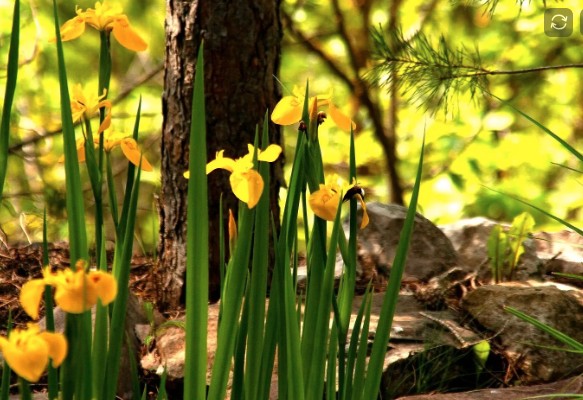
If November signals the stick season, a time of bare limbs and rest, March ushers in the mud season, a time when copious amounts of snow melt seeps into the earth and ignites the seeds of growth. The mud season is like a trumpet blaring to announce that the world is reborn.
It doesn’t feel like it in my part of the country where sixty-five degree days slip into below thirty with flurries the next day. I eye the shovel and snow brush in the back seat of my car and shake my head. Too early. This is only Nature’s sense of humor reminding me that life unfolds rather than rushes in.
In the mud season, I pull on my rubber boots (what the Brits would call “wellies”) and trudge out to the creek that cuts a long path through villages, towns, and rural farmlands; a creek where I kayak in the hot summer months. For weeks, I’ll check the silty creek bank just below a rusting pedestrian bridge for the rebellious irises.
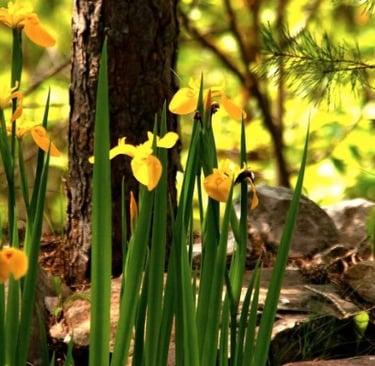
I call them rebellious because they’re completely out of place, belonging in someone’s well-tended garden. But here they grow, sunshine yellow blooms atop emerald green stalks. The mystery of how they ended up here is part of their allure. Will they still be growing? Will a rambunctious dog have dug up the bulbs before they sprouted leaves? Or will some thoughtless passer-by collect them? I admit I’ve had to restrain myself—the yellow irises in full bloom are like laughter caught in petal form and it’s hard to resist taking one home.
I have to remind myself that they are here to captivate whoever walks down the muddy slope and catches them swaying in the breeze. They are Nature’s wink. “Yes,” she says, “The days are lengthening; the air is warming. Watch, smell, listen.”
And, so, I do. I go to the creek to see gold rise out of mud, and other signs of rebirth. Accidentally, my fingers type “god” and I have to wonder if that was less a mistake than an inner knowingness. God rises out of mud and barren limbs. Sodden earth and brown meadows. Colors emerge out of a grey palette: violet, red, green, yellow, pink.
If I stand still, close my eyes, and breathe, I can smell the remains of winter ice in the water, wet grass, tree bark decaying on the forest floor, ozone in the rain-washed air.
The silence that was winter is broken by birdsong. The robins come first, their trills and twitters rising with the sun. Blue jays and geese follow, loud and persistent as if relearning how to use their voices and discovering joy.
Mud is smelly. Messy. It dares you to pay attention: to turn your nose to the sky and sniff. This is ancestral reacquaintance. Senses once attuned to the seasons that are now dulled and under-used, reawaken.
The irises tell me not to fight it, but to know from a deeper place. A place that is memory. Of dirt-covered hands planting seeds. Of backs aching under the hot sun to weed and harvest. Of bellies filled and generations sustained.
God is in the mud, they say. Offering a wink. A laugh. A welcome.
Living Wild Wisdom
CONTACT
livingwildwisdom@gmail.com
© 2025. All rights reserved.
Living Wild Wisdom on Instagram